Sign up for our Free Newsletters

Triathlete Magazine Article - Protein Recovery

BY D.I. Minkoff, MD - March 2004                    click here to open the article as a pdf.

Many athletes know that protein is an important element to the endurance athlete's recovery and health in warding off illness. But getting the maximum bang out of your protein source is the trick. A new product on the market suggests it does just that.

As a nutritionally oriented medical doctor, my goal is to restore or maintain optimum health for every person I see using natural remedies. A person in peak health can enjoy the competition of racing and training and can keep their youthful performance far beyond what most believe is possible. Often, I use my own body for testing. At 55, I'm not as fast as I used to be, but I am as intent on improving my performance as ever. I keep looking for things that make me feel better, give me better energy, faster recovery and more strength that I can pass along to others.

Just a few months ago, I found a supplement that was beyond anything that I have seen. After using it for four weeks, my chronic hamstring problem of four years healed. I could do long back-to-back workouts without getting sick, and I saw a significant increase in strength in the gym.

I had my best finish time at Ironman Canada in five years, and my maximum heart rate increased by 10 points. I felt so good that I thought it wouldn't last—but it has. Then George Hincapie of the U.S. Postal Cycling Team began using the product. George suffered from a parasitic infection in the spring of 2003 and after being treated for the infection, just wasn't feeling well. But he began using the product and had his best cycling season ever at this year's Tour de France and Tour de Spain.

Peter Reid used the product prior to and during this year's Ironman Hawaii, and, well, you know what they did.

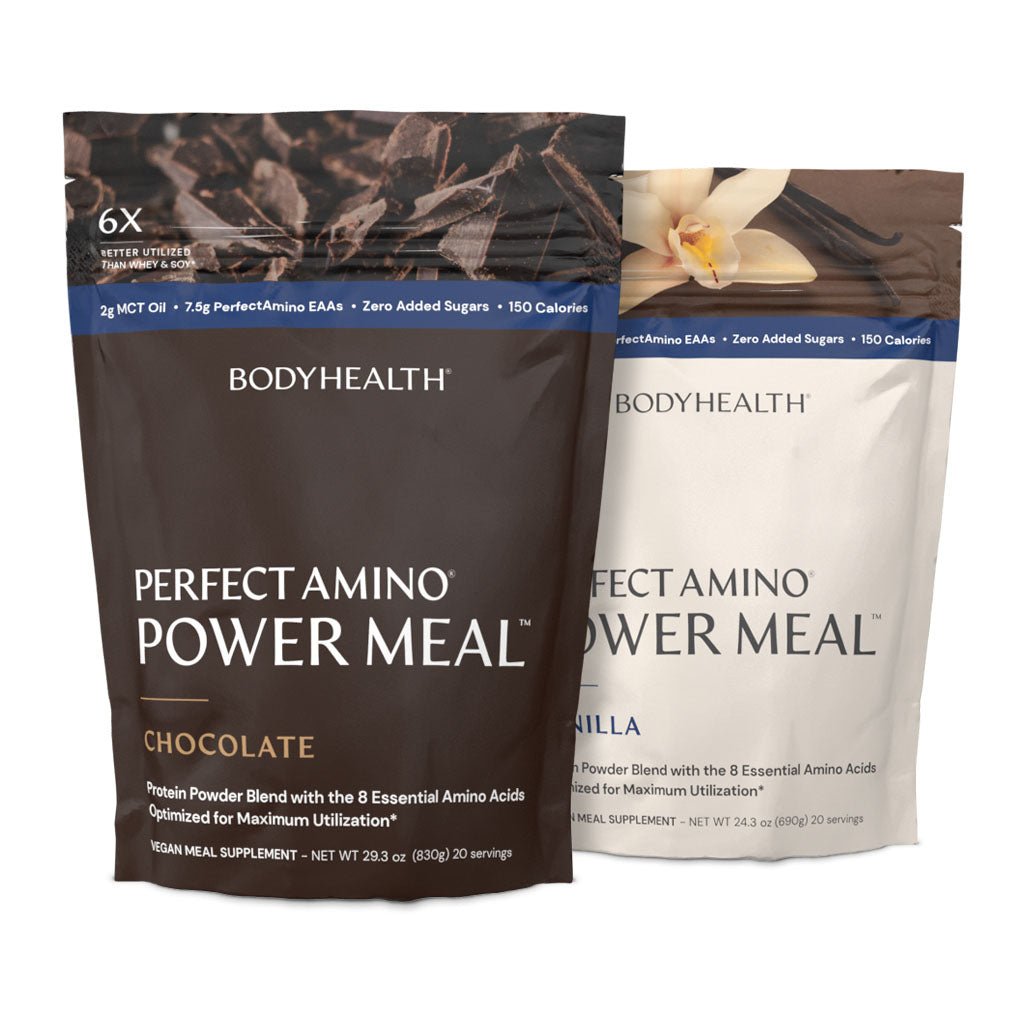
The product, Master Amino Acid Pattern (MAP), is something that just might change your opinion of what you are capable of. But to fully understand what it does, a little protein-chemistry 101 is in order.

Our bodies are built of proteins, which are what our muscles, bones, hair, skin and organs are made of. Proteins are also the basis for many of our hormones, neurotransmitters and immune cells—you could call them the building blocks of the body.

When we use our bodies a lot, such as in training and racing, these proteins break down and need to be replaced. The faster they are replaced, the faster we return to our normal state. Overtraining is a result of our repair systems not keeping up with this breakdown.

For a muscle to get stronger, it must add protein to its existing mass. When muscles work at a high level, they build up lactic acid. The muscle cells have enzymes to breakdown the lactic acid. These enzymes are also made of protein.

Proteins are actually chains made up of smaller basic units called amino acids. These amino acids are linked together (like beads on a string) to form longer proteins, which differ based on which amino acids are used and in what order. For instance, hair protein would have a different string of amino acids than a muscle protein.

In nature, there are 22 known amino acids, but our bodies only really need eight of them to construct all of the proteins of our body. These eight are called essential amino acids. Essential, because we cannot live without them; they must be part of our dietary
intake.

After a hard workout, the muscle cells need to rebuild their proteins. If the amino acids they need are not readily available to the cell, those proteins will not be built, and the whole sequence of repair will be incomplete or delayed. As a result, new muscle growth does not happen or happens belatedly, so the training effect one expects does not occur, and, even worse, breakdown and injury follow.

The same thing happens with the proteins that make up our immune system. After a hard training or race day, if there is insufficient protein intake to complete the repair process and keep the immune proteins at their optimal level, we can get sick. The bottom line is that we need the proteins that give us the eight essential amino acids, in the correct proportions, and in a form that the body can easily use.

We can evaluate various sources of protein from our diets based on how well they supply these eight essential amino acids and how well the body can use the amino acids from them to build up body structure. Nutritionists use the term Net Nitrogen Usage (NNU) to evaluate this. The NNU is a measure of what percentage of a given protein is actually used by the body. If the protein is in the wrong form, or the proportion of amino acids that make up that protein are not what the body needs, then the protein will be turned into waste or burned as calories. Since proteins have as their core nitrogen, you can measure how much nitrogen was actually used by the body after a meal for its structure, versus how much of it became a waste product.

If a protein is used well by the body, its NNU will be high. The best food found in nature is whole eggs, which have an NNU of 48 percent. This means that 48 percent of the protein of the egg can be used by the body to make the proteins it needs. It also means that 52 percent of that ingested protein will be turned into waste. Take a look at this chart and you will see the NNU of some common protein sources. Of note is whey protein that has an NNU of only 18 percent, leaving 82 percent that becomes excess calories or a waste product that the body must actively use its resources to eliminate.

If we look at the cost factor of this, of the $30 that a month's worth of whey protein costs, you are only getting $5.40 worth of usable protein; $26.60 is going down the toilet or being used as calories. Find out what the NNU is on the aminos you might be taking. Chances are very good it's never been tested, and guaranteed, its NNU is less than 20 percent.

MAP, on the other hand, has an NNU of 99 percent. That is 99 percent turned into body structure with less than one percent waste or calories. MAP supplies the cells with all of the essential amino acids in the correct proportions so that the cell can make the necessary protein right away. It comes in tablet form, does not need digestion and because of the special formulation, it reaches the blood stream in only 23 minutes and is then available to every cell. This translates into faster and more complete recovery, greater strength gains, improved lactic acid clearance, improved immunity and stronger bones, tendons and ligaments.

In medical studies, looking at Masters track and field athletes who were taking MAP, after one month of use, muscle strength changes were impressive and lactic acid clearance improved by 16 percent.

MAP is not gene therapy and it is not illegal anabolic steroids or growth hormone. But, given the genes that you have, you can maximize your health and performance if you give your body the nutrition it needs when it needs it. Since the body is 60 percent water and 19 percent protein, drinking a lot of water and using a supplement for your protein intake, such as MAP—especially before and after workouts—can help you reach some of those maximal fitness goals. Labeled “protein therapy,” MAP is best described as an anabolic unsteroid, which allows your body, through nutrition, to build itself up without any harmful drug effects. More information can be found at www.BodyHealth.com


Order MAP


     © 2010 BodyHealth.com. All Rights Reserved. Site Disclaimer